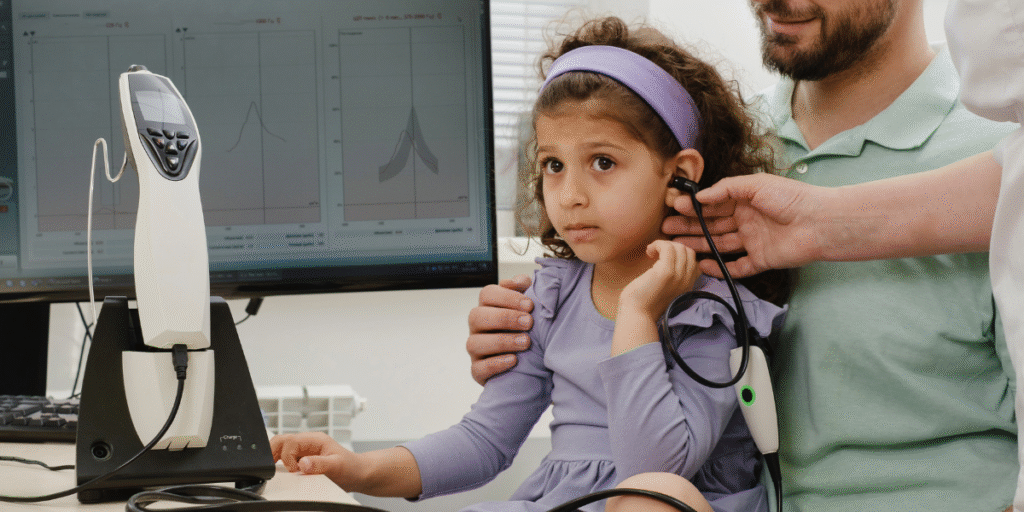
Hearing keeps us connected to people, conversations, and the world around us. For many adults, gradual hearing changes can make it harder to follow discussions, enjoy music, or hear clearly in busy environments. Regular hearing measurements help identify hearing loss early and guide the right treatment or hearing aid support.
Modern hearing test clinics use accurate, evidence-based tools such as audiometry, tympanometry, and otoacoustic emissions (OAE) testing. These methods offer reliable insights into ear health and hearing ability. This article explains the eight main types of hearing measurements, what the results mean, and how they lead to better hearing care.
What Are Hearing Measurements?
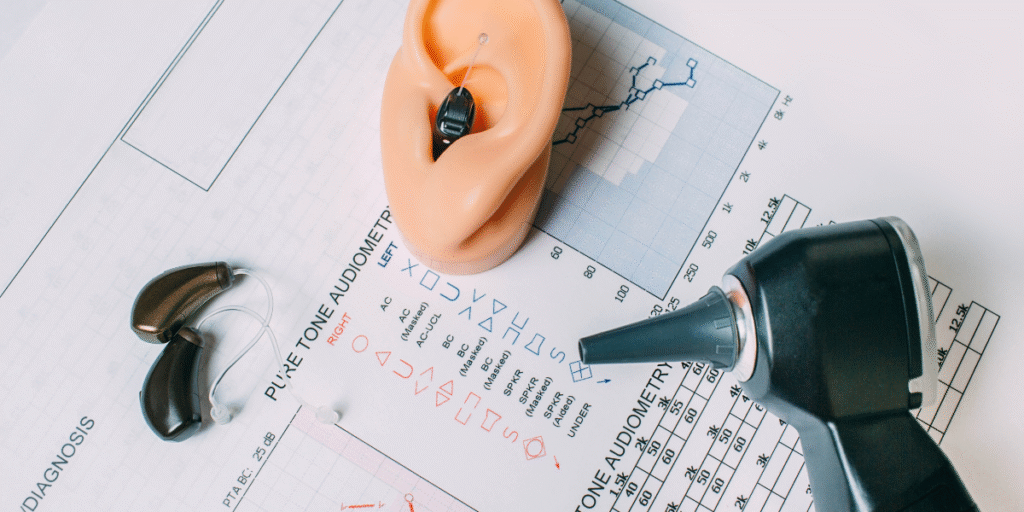
Hearing measurements are clinical tests designed to assess how effectively you can detect sounds across various pitches and volumes. Audiologists use them to evaluate hearing health, diagnose loss, and recommend suitable solutions.
The most common types include audiometry, tympanometry, and otoacoustic emissions testing. Together, these assessments reveal both the degree and type of hearing loss, whether from the outer, middle, or inner ear.
The 8 Main Types of Hearing Tests
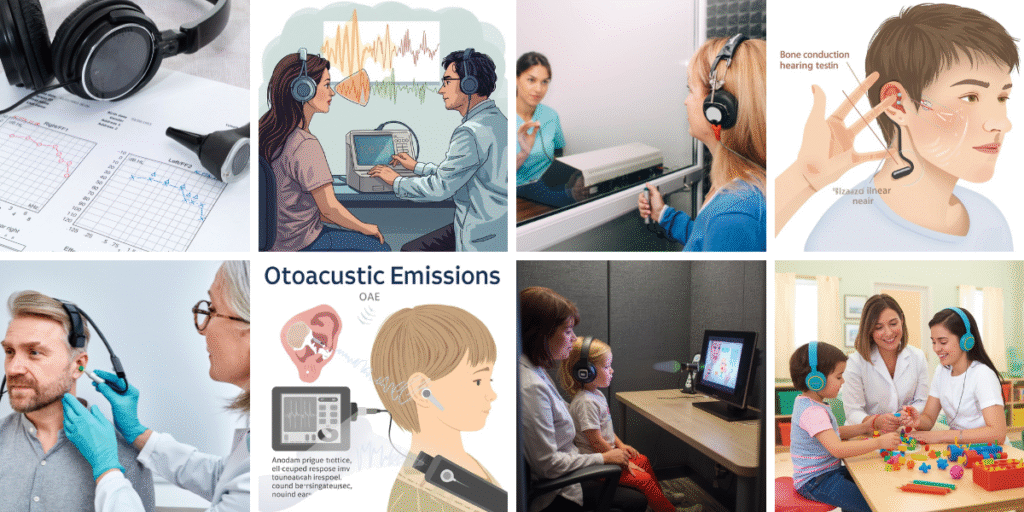
Hearing clinics across Australia use a variety of diagnostic tools to assess hearing health. Below are the eight main hearing measurements audiologists rely on to evaluate hearing function.
1. Audiometry
Audiometry is the primary hearing test used for adults and older adults. It measures hearing sensitivity across a range of sound frequencies and intensities, with results shown on an audiogram.
This test helps identify early age-related hearing loss (presbycusis) and supports accurate hearing aid fittings. In hearing test clinics in Melbourne, audiometry remains the benchmark for assessing hearing.
2. Pure Tone Testing
Pure tone testing forms part of audiometry. During the test, you listen to tones at various frequencies through headphones. The audiologist notes the quietest sounds you can hear at each level.
This measurement defines your hearing threshold and provides the foundation for hearing aid adjustment or further diagnosis.
3. Speech Testing
Speech testing measures how well you recognise and repeat words in both quiet and noisy situations. It reflects how you manage real-life listening, such as understanding people in cafes or busy rooms.
By analysing speech clarity, hearing test professionals in Melbourne can pinpoint whether issues arise from the inner ear or auditory processing in the brain.
4. Bone Conduction Testing
Bone conduction testing examines the path of sound vibrations as they pass through the skull to the inner ear, avoiding the outer and middle ear entirely. Comparing air and bone conduction results reveals whether hearing loss is conductive or sensorineural.
This test helps audiologists determine whether the issue is with sound transmission or nerve function.
5. Tympanometry
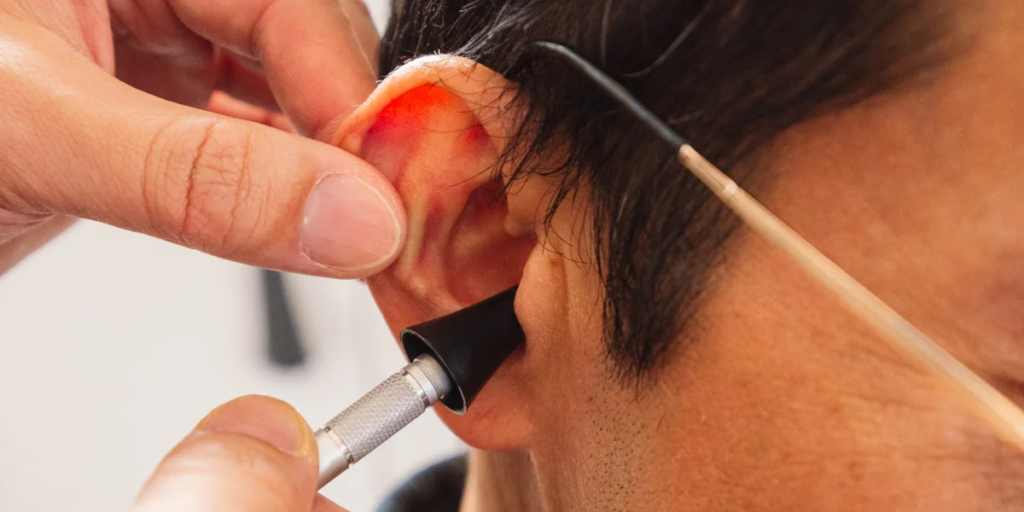
Tympanometry measures how your eardrum moves when air pressure changes inside the ear canal. It helps detect middle ear problems such as fluid, wax, or eardrum perforations.
Used in both adult and child assessments, tympanometry provides valuable insight into ear health and is a key part of a hearing test session.
6. Otoacoustic Emissions (OAE) Testing
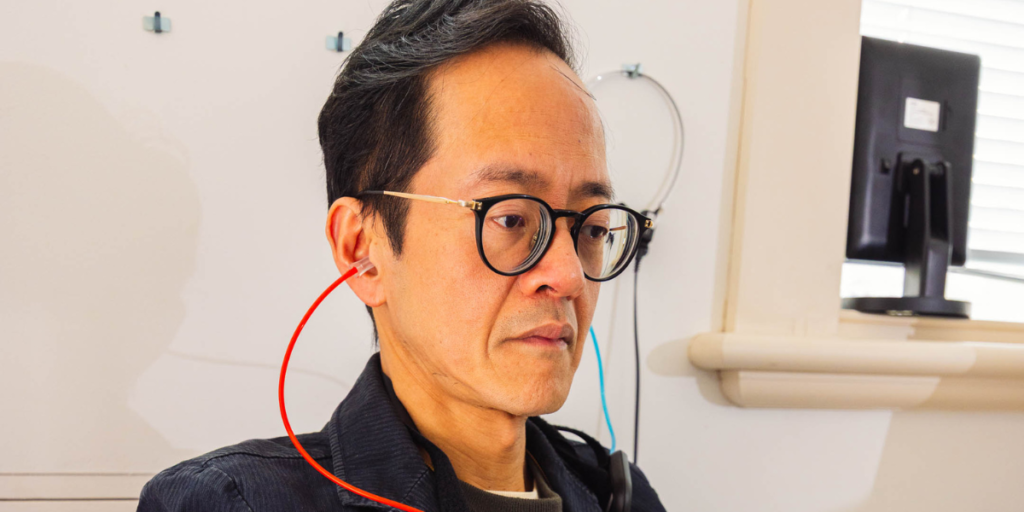
Otoacoustic emissions testing records the faint sounds produced by healthy hair cells in the cochlea. These emissions show that the inner ear is working properly.
This non-invasive hearing measurement is ideal for newborn screenings and for adults with suspected inner ear issues. Many hearing test clinics in Melbourne combine OAE testing with audiometry for a complete evaluation.
7. Visual Reinforcement Audiometry
Visual reinforcement audiometry helps test babies and toddlers who cannot give verbal responses. Sounds are played, and the child is encouraged to turn their head toward a light or toy as a reward.
This technique allows audiologists to detect early hearing problems and support speech and language development.
8. Play Audiometry
Play audiometry is designed for children aged 3–5. The test uses playful activities, such as dropping a block into a bucket when a sound is heard. This turns testing into a fun, engaging experience.
By keeping the process interactive, audiologists collect reliable results while helping children feel at ease.
Understanding the Degrees of Hearing Loss
Hearing loss is assessed using decibels (dB), indicating how much louder a sound must be for you to notice it. Audiometry and related hearing measurements categorise hearing loss into several levels.
| Degree | Hearing Loss (dB) | What It Means |
| Slight | 16–20 dB | Conversations are clear, but soft or distant sounds may fade. |
| Mild | 21–40 dB | You may miss soft sounds or find noise challenging. |
| Moderate | 41–60 dB | Group conversations can be difficult. |
| Moderate-to-Severe | 61–65 dB | Voices need to be raised for you to hear, and visual cues and aids will be essential to communicate effectively. |
| Severe | 66–90 dB | Only loud, nearby sounds are audible. |
| Profound | >90 dB | Very little hearing remains; hearing aids may not provide effective assistance. Cochlear implantation may be crucial at this point. |
Knowing your hearing level helps audiologists recommend the right hearing aid or medical support.
How to Read Your Hearing Test Results

An audiogram shows results from your audiometry test, mapping hearing thresholds across frequencies and loudness levels. The horizontal axis represents pitch (frequency in hertz), and the vertical axis represents loudness (in decibels hearing level, dB HL).
Symbols mark responses for each ear:
- O: Right ear (air conduction)
- X: Left ear (air conduction)
- <: Right ear (bone conduction)
- >: Left ear (bone conduction)
Understanding these symbols reveals whether hearing loss is mild, moderate, or severe. Audiologists often walk patients through their audiogram to help interpret the findings clearly.
The 1-3-6 Rule in Audiology
The 1-3-6 rule guides early detection and treatment of hearing loss:
- 1 month: Complete a hearing screening
- 3 months: Diagnostic testing for any failed screenings
- 6 months: Begin early intervention and management
Although designed for newborns, this rule highlights the value of prompt action for adults. Regular hearing test visits support communication and long-term hearing health.
How to Read an Audiogram
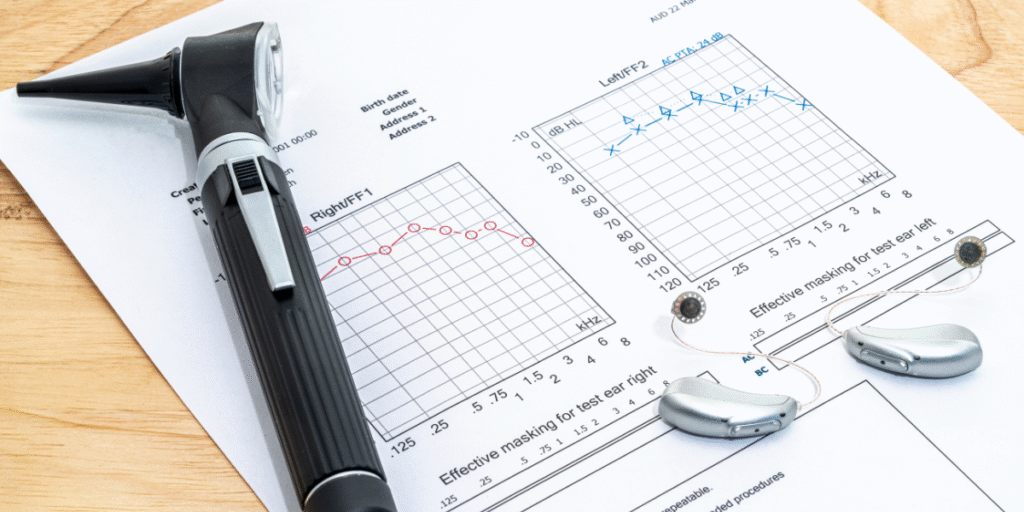
Audiologists use audiograms that display frequencies from 125 Hz to 8000 Hz and sound levels from 0 to 120 dB HL. This graph helps map the faintest sounds you can hear.
To interpret your results:
- Review the frequency range (horizontal axis) for weak areas.
- Note dips or gaps that indicate hearing difficulty.
- Compare both ears to detect an imbalance.
Audiologists often take time to explain your audiogram so you understand how it connects to real-life hearing situations.
What Is the Average Hearing Loss by Age?
Hearing changes naturally over time. Data from audiometry shows these trends:
- 40–60 years: Early signs of high-frequency hearing loss.
- 60–75 years: Difficulty following speech in noisy places.
- 75+ years: Greater chance of moderate or severe loss.
Regular hearing tests, check-ups, and updated hearing measurements track these changes, supporting early intervention and maintaining communication confidence.
How NeuroHearing Supports Your Hearing Journey

At NeuroHearing, located in Canterbury, we go beyond basic screenings to offer comprehensive evaluations that integrate advanced diagnostic tools. Our approach ensures a complete picture of your hearing health, focusing on the connection between your ears and your brain.
We utilise a combination of key hearing measurements to deliver accurate diagnoses and tailored treatment plans:
- Comprehensive Audiometry & Pure Tone Testing: We establish your precise hearing thresholds across all relevant frequencies to accurately diagnose any degree of loss, from slight to profound.
- Speech Testing: Crucially, we test your ability to understand speech in both quiet and noise, giving us a real-world measure of your listening difficulties—a critical step that guides the sophisticated programming of your hearing aids.
- Tympanometry: This essential measurement is used to rule out any middle ear issues (like fluid or eardrum perforation) that might affect your hearing, ensuring that any hearing loss identified is correctly attributed and treated.
- Audible Contrast Threshold (ACT) Testing: We utilise ACT testing to non-invasively evaluate your ability to detect subtle differences in sound, providing valuable insights into auditory clarity and processing — especially useful for identifying early or complex hearing challenges.
By meticulously analysing the results from these various hearing measurements, we personalise your hearing aid support to improve clarity, confidence, and connection with family and friends. Whether you receive government-subsidised support or private care, our evidence-based approach ensures you benefit from the most precise diagnostic data available.
With advanced testing and genuine care, NeuroHearing helps you experience better hearing and a richer life in Melbourne.
Conclusion
Understanding hearing measurements gives you the knowledge to protect and improve your hearing. With advanced tests like audiometry, tympanometry, and audible contrast threshold (ACT) testing, audiologists can identify issues accurately and provide tailored solutions.
Whether you’re experiencing age-related hearing loss or looking for clearer sound, booking a hearing test in Melbourne is the first step to reconnecting with the world around you.
Take the next step with NeuroHearing today. Book your comprehensive hearing test in Canterbury and experience clearer, more confident hearing for life.